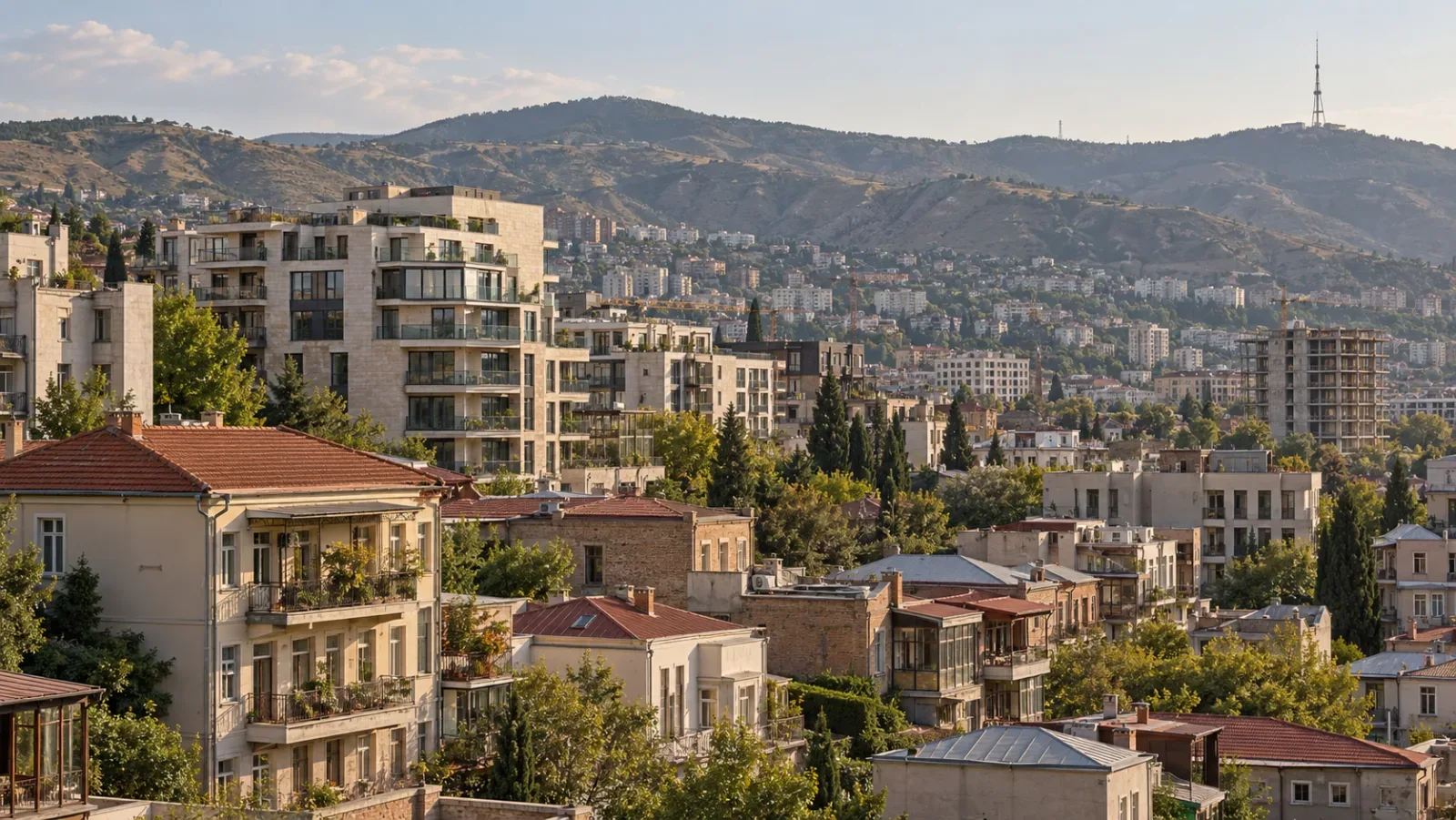
A total of 34,434 apartments were sold in Tbilisi from January to September 2026, 18% more than in the same period a year earlier. Commersant reports this, citing TBC Capital's market analysis. The value of sales rose by 23% to around $3,100,000,000. At the same time, newly approved residential space declined.
The housing market in Georgia's capital thus shows two trends: the number of completed purchases is growing strongly, while less additional residential space is being approved. Prices and rents are changing much more slowly than transaction volumes.
Resales Drive September's Growth
According to the TBC analysis reported by BM.ge, 4,254 apartments were sold in September. This represents an increase of 10% compared with September 2025. The average price per square metre was $1,373, 3% above the previous year's figure. Average rents rose by just 1%.
Resales accounted for most of the growth: their number increased by 13% to 3,496 apartments. Sales of new apartments, by contrast, fell by 3% to 758 units. The decline was concentrated in the segment below $1,500/m².
It is therefore worth comparing new builds and resale properties when buying. The two segments are developing differently, and completed apartments in particular allow buyers to assess their condition, fittings and surroundings directly.
Rental Income Grows More Slowly Than Purchase Prices
For landlords, the relationship between purchase price and rent is particularly revealing. The average monthly rent in September was around US$10.3 per square metre. According to TBC Capital, this translates into an average gross rental yield of about 8%. As purchase prices are rising slightly faster than rents, yields have recently eased a little.
In our view, this carries an important message: a buoyant sales market and rising rental income are separate developments. What matters for your calculations is the actual total cost of the apartment and the rent achievable at its specific location. Fit-out, furnishing, management and ongoing costs should therefore be included in the comparison from the outset.
Less Approved Space Changes the Outlook
According to the analysis reported by Commersant, residential space approved in the first nine months fell by 10% to around 854,000 m². This indicator describes the potential additional supply from newly issued building permits.
The market's future development will depend on how these projects and construction already underway meet demand. Permit figures alone cannot tell us whether supply will tighten or existing stock will gradually be absorbed. They do, however, make clear why future construction activity deserves attention alongside current sales.
What Does This Mean for Buyers and Investors?
More transactions combined with moderate price growth offer an interesting basis for a carefully targeted purchase. We recommend comparing properties within the same neighbourhood and with a similar level of finish. The total cost of bringing a property into use and verifiable rents for similar apartments are particularly informative.
An active market is a positive signal for Georgia's development as a property investment destination. Over the long term, we see the best prospects in locations where housing quality, transport links and infrastructure work well together in daily life. These qualities connect the city's development with a property's lasting practical value.
Our Conclusion
Tbilisi remains dynamic: substantially more apartment purchases coincide with moderately rising prices and less newly approved residential space. In our view, this underlines the capital's appeal within Georgia's property market. Carefully selected apartments with good transport links offer a compelling opportunity to participate in this development. Their quality and everyday usefulness also provide a strong foundation for long-term value growth.